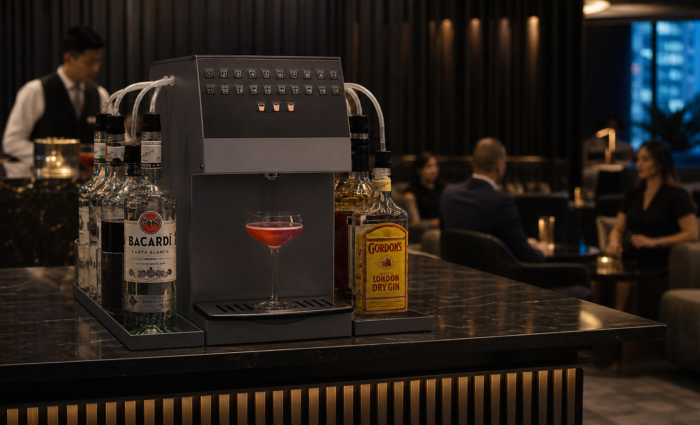
Commercial Cocktail Machine Buying Guide for B2B Buyers
Choosing a commercial cocktail machine is not only a product decision. For distributors, bar equipment dealers, hotels, restaurants and hospitality groups, it is an operational decision that affects menu planning, installation, staff workflow, cleaning and future expansion.
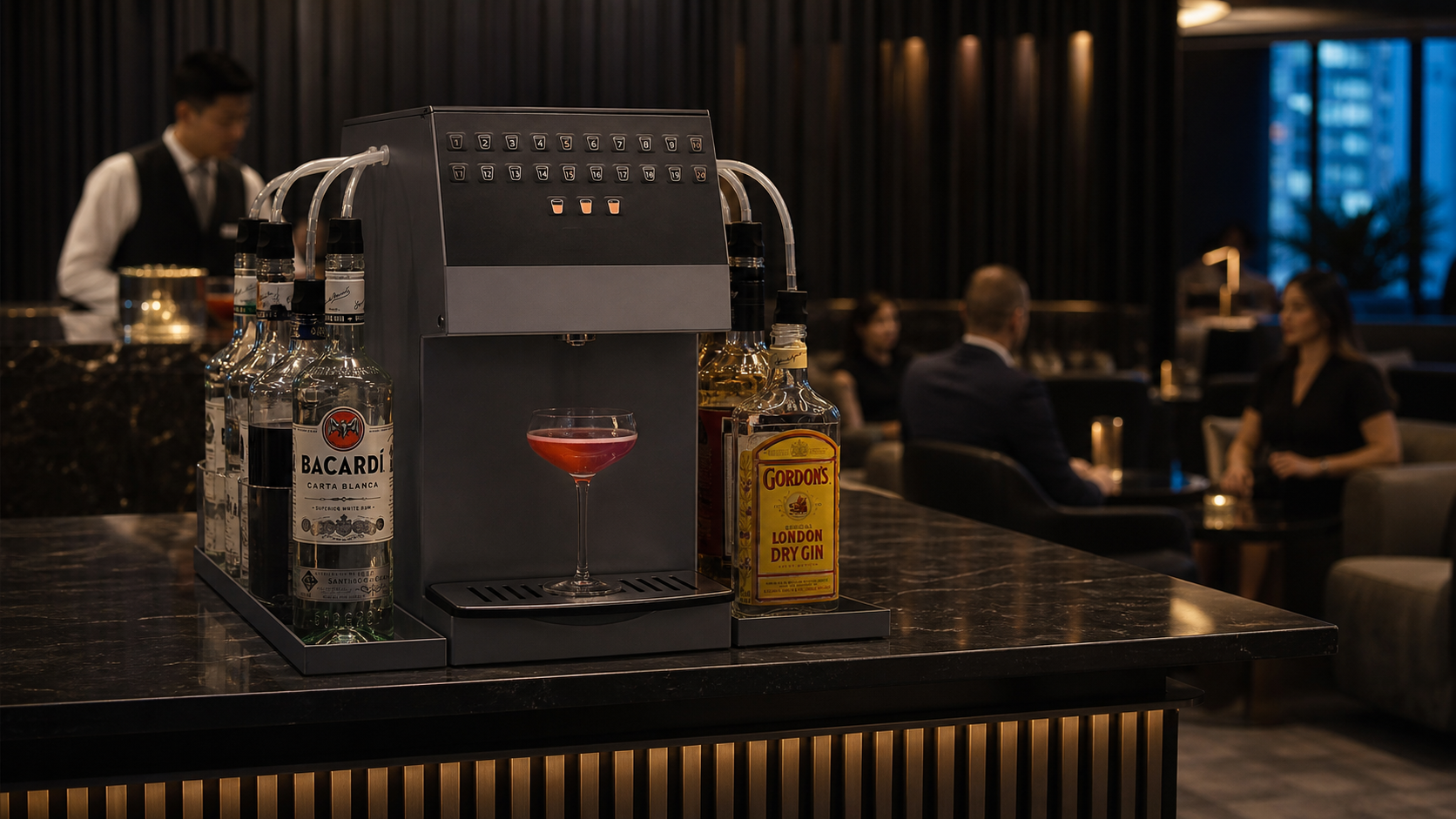
Start with the intended commercial application
A machine that suits a compact cocktail bar may not be the best configuration for a hotel lounge, restaurant group or distributor demonstration program. Before comparing models, define where the equipment will be installed, who will operate it and how the beverage menu will be managed.
Bars and nightclubs often prioritize fast access to popular recipes during busy periods. Hotels and resorts may place greater emphasis on repeatable guest experiences across several service areas. Restaurant groups may need a practical way to introduce a controlled cocktail menu across multiple locations. Distributors must also consider whether one platform can address several customer segments in their market.
1. Map the ingredient channels to the planned menu
The number of connected liquid ingredients is one of the most important selection factors. Each recipe uses a combination of available spirits, liqueurs, syrups, juices or other suitable liquid bases. A focused menu can operate with fewer channels, while a broader menu generally benefits from additional connected ingredients.
MEETMIX offers the S6plus with six raw-material channels and the S12plus with twelve. Both platforms support up to twenty configured beverage selections and three cup-size options. B2B buyers should map their priority recipes before choosing a model instead of selecting only by exterior size.
- Six-channel configuration: suitable for a focused menu, compact installation and straightforward daily ingredient management.
- Twelve-channel configuration: supports a wider combination of connected ingredients and greater recipe flexibility.
- Recipe planning: confirm which ingredients are shared across the most frequently ordered drinks.
2. Evaluate installation space and ingredient placement
Commercial equipment must fit the real service environment. Check counter width, working depth, access for refilling, glass placement, cable routing and the position of ingredient containers. The operator should be able to replenish and clean the system without disrupting the surrounding service area.
The S6plus measures 39 × 40 × 40 cm and weighs 9 kg. The S12plus measures 68 × 40 × 40 cm and weighs 13.8 kg. Both use lateral raw-material placement. These specifications help project teams plan the counter and ingredient area before installation.
3. Review recipe control and serving-size options
A commercial cocktail machine should support the operator’s actual beverage program. Buyers should confirm how recipes are configured, how staff select drinks and whether different serving sizes can be managed. Clear recipe control is especially valuable when a hospitality group wants the same menu standards across several teams or locations.
MEETMIX S6plus and S12plus provide twenty beverage selections, small, medium and large cup-size options, and a back-end management system as standard configuration. Final recipes still depend on the ingredients and program prepared for the project.
4. Plan cleaning as part of daily operations
Cleaning should be evaluated before purchase, not after installation. Liquid lines and ingredient-contact areas need a defined routine based on the beverages used and the operating schedule. Staff should understand how to initiate cleaning, inspect lines and keep the dispensing area ready for service.
The S6plus and S12plus include a cleaning function as standard configuration and use food-grade silicone tubing for liquid paths. Buyers should still create an operating procedure for opening, closing, ingredient changes and preventive inspection.
For a more detailed routine, read the commercial cocktail machine cleaning and maintenance guide.
5. Compare service workflow, not only dispensing speed
Commercial efficiency is broader than the time required to fill one glass. Consider how many manual measuring steps are removed, how easily new staff can follow the workflow, how ingredients are replenished and how the machine fits into peak-hour service.
Automation is most useful when a business wants repeatable preparation for approved recipes. It does not replace menu development, ingredient quality, presentation or responsible staff supervision. The strongest projects combine an automated dispensing process with a clear hospitality workflow.
6. Confirm customization requirements early
Distributors and OEM/ODM partners may need more than a standard product. Branding, exterior design, display requirements, user-interface changes, PCB hardware, firmware, refrigeration, carbonation and channel configuration can influence engineering scope and project timing.
Prepare a concise requirement document before contacting a manufacturer. It should describe the target market, intended application, planned ingredients, expected user interface and any hardware or appearance changes. MEETMIX reviews customization requirements according to the project scope; unsupported assumptions should not be built into the purchasing plan before technical confirmation.
7. Assess the manufacturer and partnership model
For overseas B2B buyers, the supplier relationship matters as much as the machine. Ask whether the manufacturer can support product selection, technical communication, OEM/ODM discussions and distributor cooperation. Clear project information helps both sides determine whether a standard model or custom configuration is more appropriate.
MEETMIX is the intelligent cocktail machine brand of Dongguan Xuyu Electronics Co., Ltd. The company integrates product development, engineering, production and quality management for international commercial projects.
Commercial cocktail machine selection checklist
- Define the venue type and daily service workflow.
- List the recipes and connected ingredients required.
- Choose an appropriate six-channel or twelve-channel platform.
- Measure the installation and ingredient-storage area.
- Confirm recipe management and cup-size requirements.
- Plan cleaning, refilling and staff responsibilities.
- Identify standard-product, distributor or OEM/ODM needs.
- Request technical confirmation before finalizing the project.
Which MEETMIX model should you discuss?
The MEETMIX S6plus commercial cocktail machine is a practical starting point for buyers who need six connected ingredients in a compact footprint. The MEETMIX S12plus automatic cocktail machine offers twelve connected ingredients for projects that require broader recipe combinations.
Explore the complete MEETMIX commercial cocktail machine range, or contact the manufacturer with your venue type, target market and ingredient plan.